Technical Expertise
Customs Valuation and Transfer Pricing
Valuation, transfer-pricing adjustments, royalties, assists and customs-accounting coherence under audit pressure and year-end adjustment risk.
Why valuation failures usually surface late
The commercial narrative and the customs narrative can drift apart for months before the business realises they are no longer describing the same price.
Related-party pricing, year-end adjustments, assists, engineering inputs, royalties and licence fees often sit in different teams, different systems and different documents. Finance may see a coherent transfer-pricing model while customs still relies on a declaration value that does not fully explain how the final price was assembled. That gap is where valuation risk grows.
CSA Nexus helps clients bridge that gap before it becomes an audit issue, a broker question or a correction cycle handled too late and too defensively. The aim is not only to explain the chosen valuation method. It is to align the commercial arrangement, customs treatment and evidence record supporting the declared value.
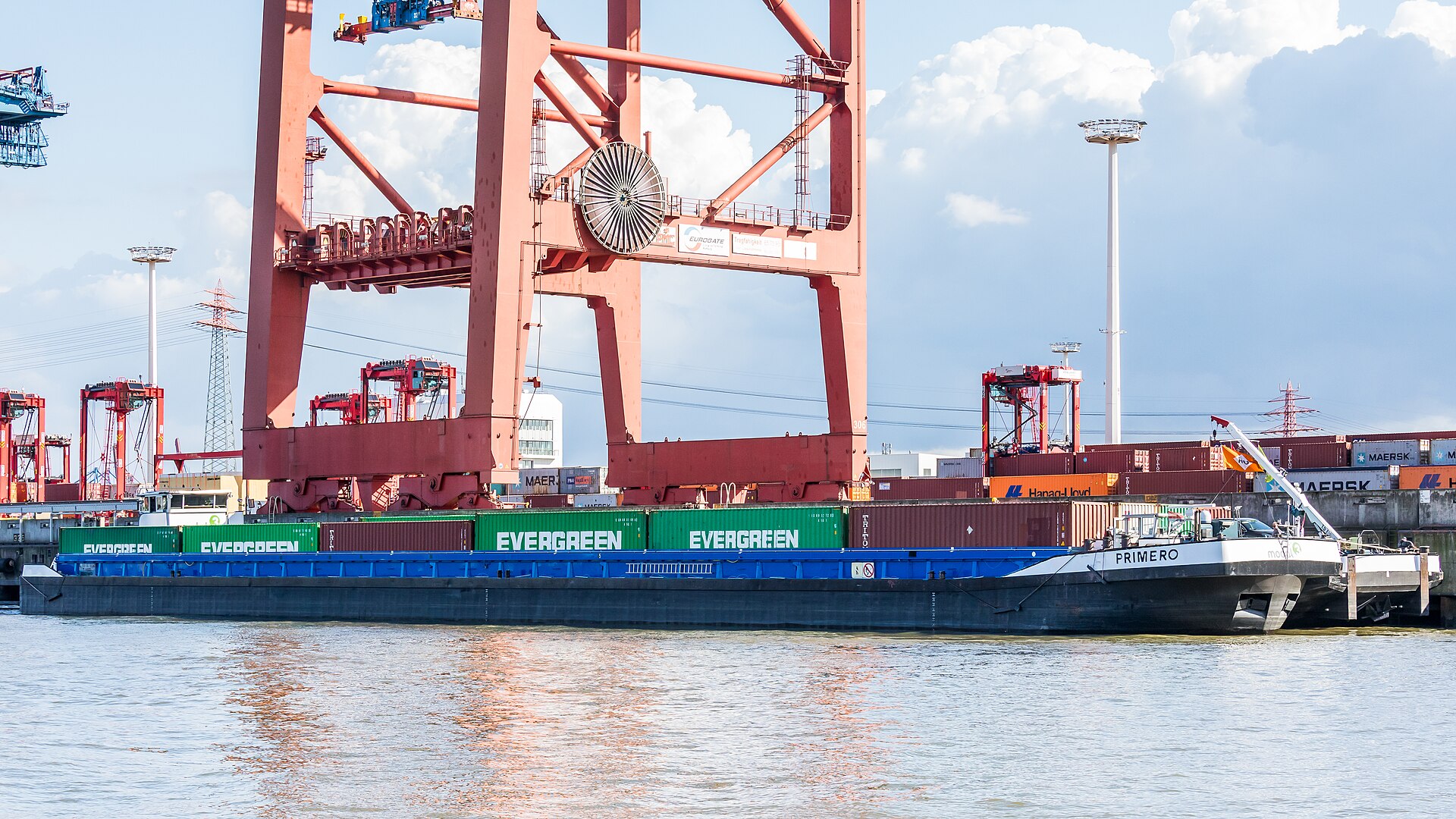
Where valuation usually breaks.
Royalties left outside the customs file, assists not apportioned properly, year-end TP adjustments discovered too late and broker instructions disconnected from the commercial reality.
Core workstreams
The practical objective is to make the customs value more explainable, more repeatable and less vulnerable to year-end surprises.
Method selection
Transaction value versus alternative methods analysed against the real commercial arrangement, not treated as a formality.
Royalties and assists
Review of dutiable additions where licence fees, tooling, design or external engineering input affect the customs base.
TP bridge
Translation of transfer-pricing adjustments into a customs logic that explains whether a post-import delta exists and how it should be handled.
Corrective path
Clearer remediation where value needs to be corrected, documented or reconciled with accounting and broker execution before audit pressure escalates.
Why the customs-accounting bridge matters
Valuation questions are rarely solved by customs alone because the relevant facts often originate in finance, procurement, treasury or legal agreements. The customs file therefore needs to be able to read the commercial arrangement in customs terms: what is part of the dutiable base, which payments are relevant, how year-end corrections are handled and whether the declared value remains defensible once the books move.
That bridge is also where governance quality becomes visible. If the declared value cannot be explained against the underlying contracts and accounting events, the business is left defending numbers that were never translated into a proper customs narrative.
What clients usually need
Most mandates in this area are not asking for a lecture on the WTO hierarchy. They are asking for a cleaner answer to practical questions: whether royalties are dutiable, how intercompany pricing interacts with customs, whether downward adjustments are recoverable, and how to stop recurring mismatch between finance records, broker instructions and customs declarations.
That is why the service is presented here as a reconciliation exercise, not just a legal topic. The client needs a usable decision path, a corrective path and an audit-ready explanation that survives year-end pressure and repeat movements.
The Valuation Risk Iceberg
Visible transaction value
Audit Defence
Are your add-ons correctly apportioned and documented before UCC Art. 71 becomes an audit question instead of a planning question?
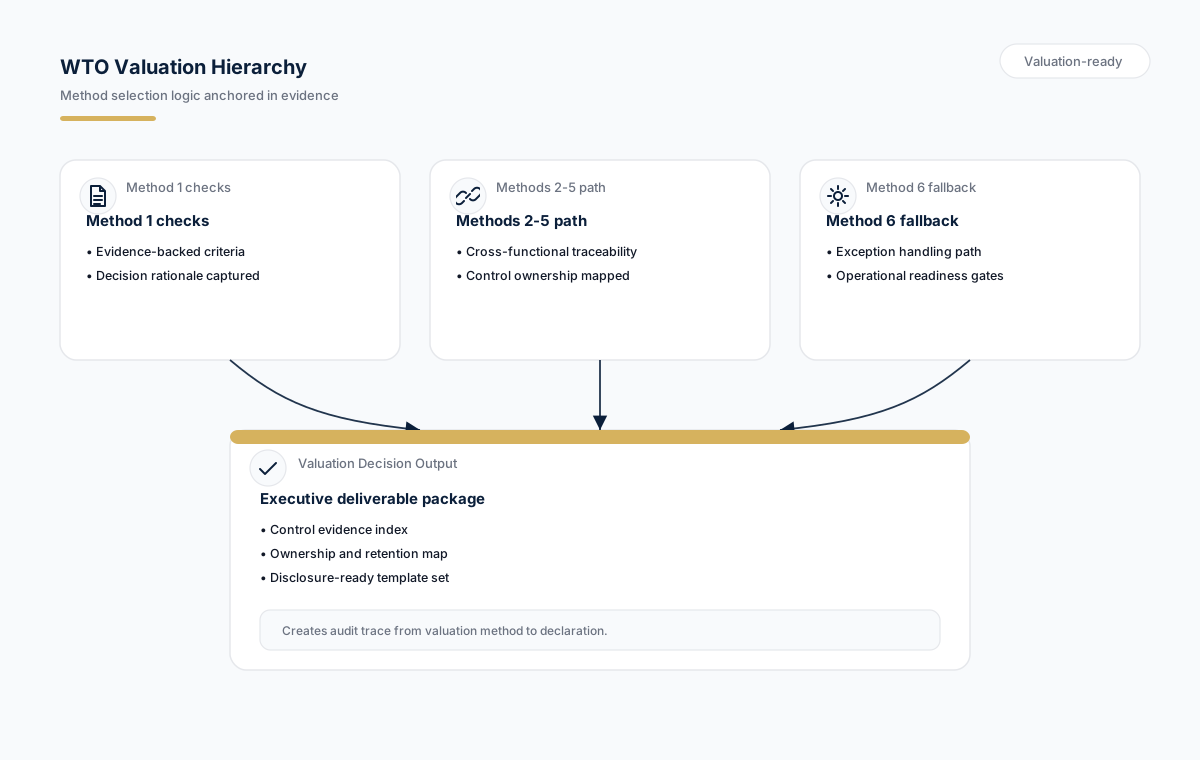
The WTO Valuation Hierarchy
Application of transaction value is never automatic in related-party or structured-supply-chain settings. The method needs to be defended against the wider commercial arrangement.
Transaction Value
Acceptable where there is a real sale for export and the relationship has not distorted the price or the wider valuation narrative.
Methods 4 & 5
Deductive and computed methods remain critical fallback tools where resale logic, production build-up or complex supply-chain evidence drives the answer.
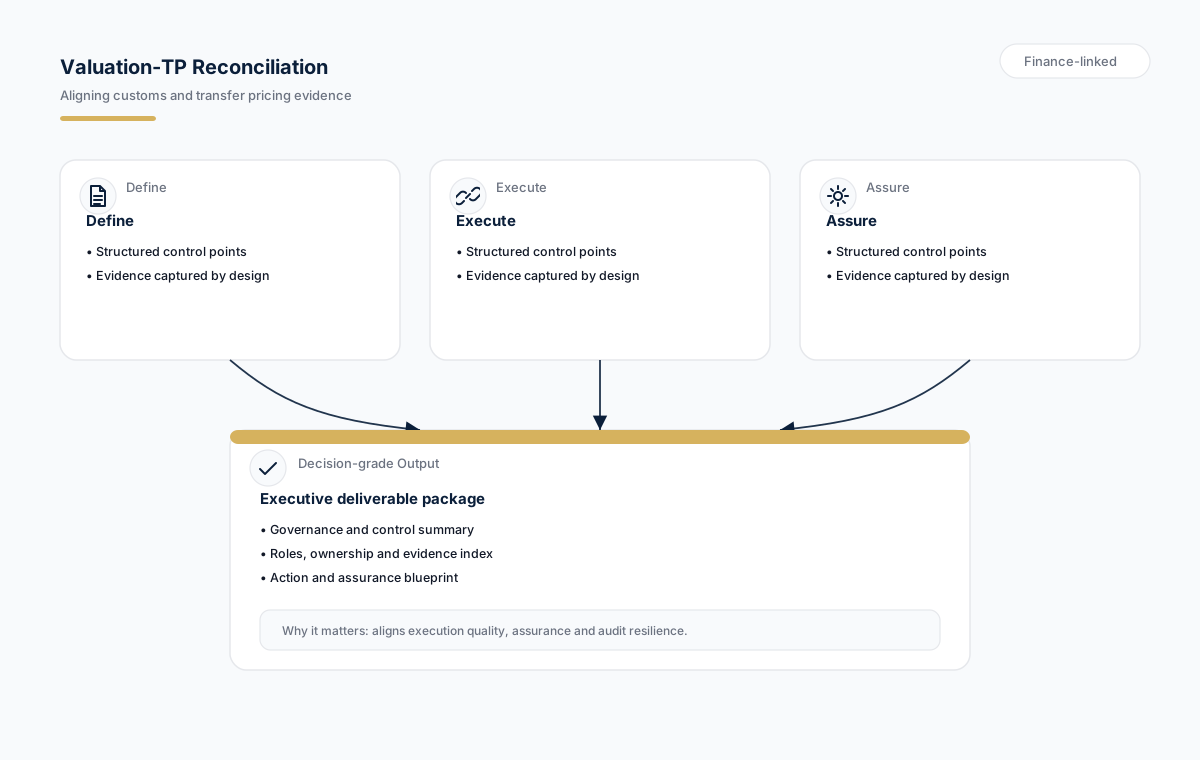
Transfer Pricing Reconciliation
We analyze TP policies (TNMM, Resale Price) to ensure alignment with Customs Value. We handle retro-active TP adjustments and their impact on customs duties.
| TP adjustment type | Customs impact | Strategic action |
|---|---|---|
| Upward (debit note) | Undervaluation risk and potential post-import customs debt. | Assess disclosure and correction routes before the year-end delta remains trapped between customs and finance records. |
| Downward (credit note) | Potential duty overpayment if the contract and pricing formula support recovery. | Map refund viability early, especially where Hamamatsu-style formula pricing or recoverability assumptions matter. |
Hidden Value: Assists & Royalties
Assists: tooling, molds, design work and engineering inputs provided outside the customs price often need to be apportioned back into the declared value.
Intangibles (Royalties) Royalties paid to licensors may be dutiable if they are a condition of sale. We review license agreements to determine if royalties must be added to the customs value.
Royalty dutiability check
Why it matters
Valuation problems can stay silent until an audit, a broker challenge or a year-end adjustment suddenly shows that customs and finance have been working from different stories.
Operational implication
The business needs a stable rule for how valuation assumptions are communicated, updated and corrected before the next import cycle repeats the same mismatch.
What clients should expect
A clearer valuation method narrative, better TP reconciliation, stronger evidence on dutiable elements and a more defensible corrective path.
How the valuation model is made visible
Customs valuation becomes high-risk when finance and customs operate on different clocks. Year-end transfer pricing adjustments, royalties, assists and services can change the dutiable value, but only a documented method and evidence pack will hold under audit. We bridge the gap between OECD direct-tax logic and WCO/WTO customs principles by mapping value elements, defining the method hierarchy, and aligning contracts and adjustment clauses to the operational process.
Practically, this means a reconciliation routine that explains how adjustments are treated, when disclosures are appropriate, and how to retain supporting documents. The commercial outcome is predictable landed cost, fewer disputes, and stronger audit defence.

Valuation is a governance question long before it becomes an audit question.
The photographic lead strengthens the positioning around finance, governance and cross-functional explanation.
Declared value, corrections and year-end pressure all land in live import flows.
The technical diagrams stay useful, but they no longer carry the visual argument by themselves.
| Valuation theme | Where the drift appears | What better governance delivers |
|---|---|---|
| Method and declared value | The file relies on transaction value language without testing whether the wider arrangement, restrictions or related-party conditions still support it. | The client gets a method narrative that can be used by customs, finance and management instead of one answer for the declaration and another for internal discussion. |
| Royalties, assists and additions | Dutiable additions live in contracts, engineering support or licence arrangements that never make it into the customs file until questioned later. | A cleaner evidence pack reduces the risk of late corrections, recurring broker uncertainty and weak answers when the commercial file is opened in audit. |
| Transfer-pricing adjustments | Year-end deltas are treated as a tax or finance matter only, even where they materially change import values or corrective obligations. | The TP bridge becomes operational: clients can see whether post-import adjustment, disclosure or process redesign is needed before the cycle repeats. |
| Customs-accounting reconciliation | Customs declarations, ledger logic and post-entry evidence do not reconcile cleanly, leaving the business to defend numbers with no shared source story. | Governance improves across customs, accounting and audit preparation, with fewer hidden mismatches and a clearer corrective path. |
Need a cleaner bridge between customs value, TP adjustments and the underlying accounting record?
We help structure a valuation model that explains the declared value, the add-ons and the corrective path before an audit or year-end adjustment exposes the gap.
Why this sits inside the wider offer
Valuation is where customs, finance and tax-adjacent logic often collide most visibly. Treating it as a connected workstream makes the overall advisory position more useful and more commercially credible.
Typical benefits
Clients usually gain a clearer method narrative, better treatment of royalties and TP adjustments, fewer late corrective cycles and a stronger bridge between finance records and customs declarations.
Transfer pricing as a wider bridge, not a narrow valuation footnote
The customs question only stays manageable when the transfer-pricing story can be translated into border value, import VAT and evidence governance before year-end pressure arrives.
Year-end adjustments
Debit and credit notes should not surprise customs after the fact. The contract, pricing method and correction path need to be visible before the delta lands in finance.
Intercompany pricing logic
TNMM, resale-price and other transfer-pricing constructs remain useful only when the customs file can still explain what price was declared and why it stayed defensible.
Assists, royalties and embedded services
Hidden value elements often sit in legal or finance agreements rather than in the import file. The bridge has to make them visible early enough for action.
| Bridge question | Why it matters | Evidence that should exist |
|---|---|---|
| Can the customs file explain the intercompany price? | Without that bridge, finance and customs can both be technically coherent on paper while still contradicting each other in practice. | Pricing policy, contracts, value-element map, customs method rationale and broker instruction record. |
| What happens when year-end adjustments land? | Unplanned adjustments create correction, refund or disclosure issues that become more expensive when discovered late. | Adjustment clauses, reconciliation protocol, materiality logic and a defined customs-treatment path. |
| Who owns the TP-customs-finance dialogue? | Where ownership is diffused, no team feels responsible for preserving a coherent value story across the full cycle. | Control matrix, review cadence, escalation threshold and an audit-ready evidence pack. |
Management decision path: TP, customs, indirect tax and reporting in one narrative
A strong transfer-pricing file is still incomplete if it cannot explain what changes in customs value, import VAT, year-end close and management reporting once the pricing policy or true-up begins to move.
| Trigger | Why management should care | What the operating team needs next |
|---|---|---|
| Year-end TP true-up lands after multiple imports | The issue no longer sits in direct tax alone. It may reshape customs corrections, import VAT treatment, landed-cost analytics and the finance narrative used internally. | A documented correction path, materiality logic, broker instruction protocol and evidence showing how the delta flows through customs and finance. |
| Royalties, assists or embedded services become more visible | What looked like a legal or transfer-pricing topic can quickly become a valuation and documentary-governance issue at the border. | A value-element map, contract review, customs-addition logic and ownership matrix linking tax, legal, customs and finance. |
| Entity model or route structure changes | Importer profile, pricing logic, import VAT and supporting disclosures may all need to be reread together rather than reworked in silos. | An updated operating blueprint connecting entity roles, declared value logic, VAT outcome and close-cycle evidence. |
Ownership and escalation
The best technical answer still fails if no one owns the bridge between TP policy, customs corrections, import VAT and the ledger story used at close.
Pillar Two adjacency
Transfer-pricing adjustments can alter profit allocation and effective tax rate by jurisdiction. For groups in scope, that makes TP policy and GloBE readiness part of the same governance conversation.
IFRS-aware finance bridge
IAS 12, disclosure timing and the reporting narrative matter where tax effects, year-end adjustments and post-import corrections need one coherent explanation.
| Evidence item | Primary owner | Why it belongs in the same bridge |
|---|---|---|
| Intercompany pricing policy and true-up mechanics | Tax / transfer pricing | Explains the pricing logic that customs and finance later need to translate into declared value, corrections and reporting consistency. |
| Customs method rationale and correction protocol | Customs / trade team | Keeps the border treatment aligned with the underlying TP story instead of forcing a late defensive rewrite. |
| Import VAT and accounting reconciliation file | Finance / indirect tax | Shows whether the same movement can still be read coherently across import VAT, ledger logic and management reporting. |
| Board or audit-committee briefing note | Management / controllership | Turns technical fragmentation into a decision-ready narrative on risk, ownership, disclosures and remediation priorities. |